How to Prepare Stems: The Path to a Perfect Mix
The quality of a final mix depends heavily on the quality and organization of the source materials provided. When sending your tracks to Barbreshift in Linz, structured stem preparation is not just a matter of courtesy, but a critical technical factor for the acoustic precision of your song.
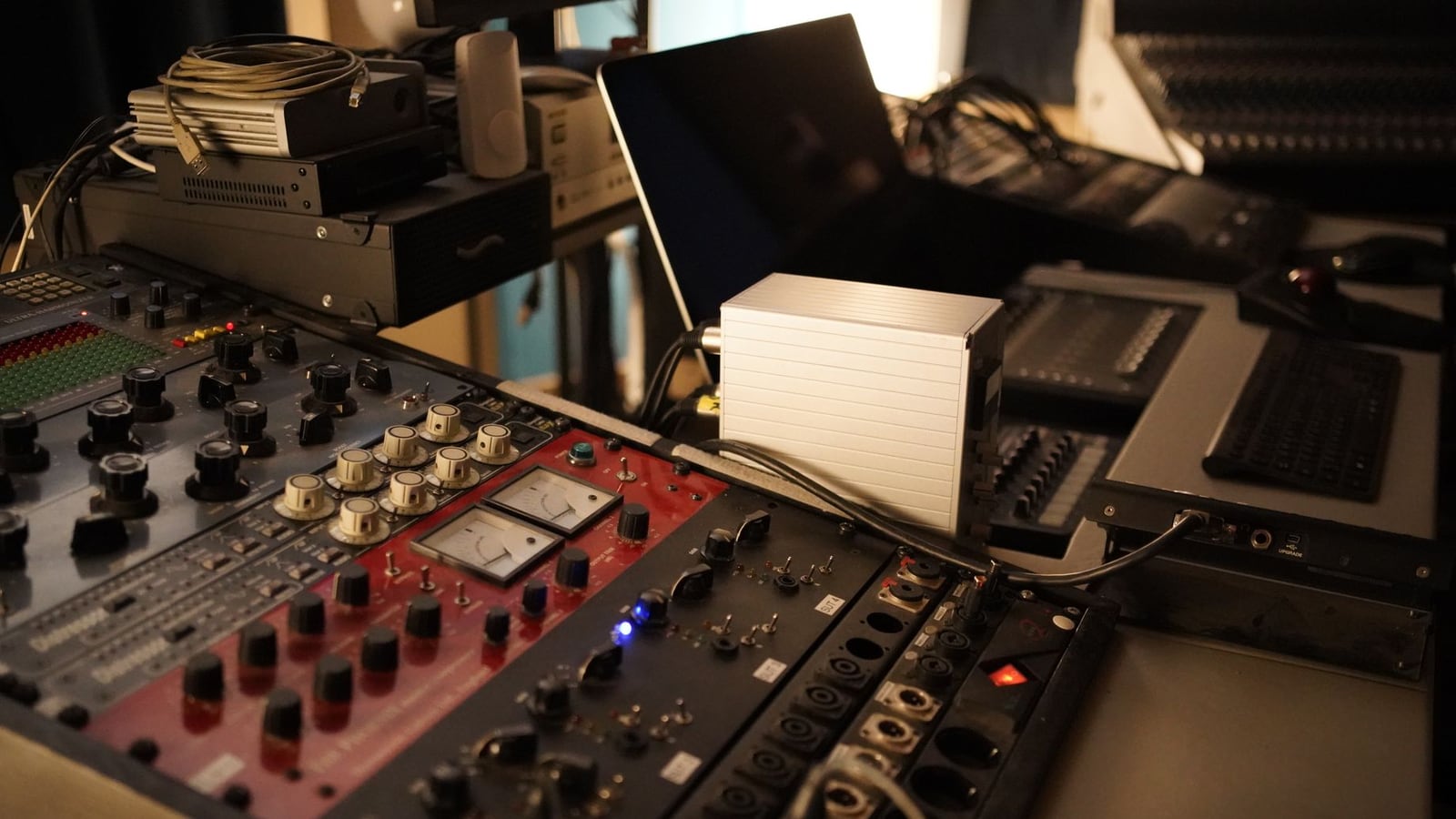
Stems are essentially grouped tracks from your project. Instead of sending every single kick drum layer or every individual synthesizer voice, you consolidate them into logical groups. This allows us as mixing engineers to maintain your production vision while creating the necessary space for EQ-ing, compression, and spatial depth. Poorly prepared projects often lead to unnecessary correction hours that may exceed the standard rate of our Single Track Mixing service.
1. The Golden Rule: Headroom and Levels
The most common problem with online submissions is "clipping." If your tracks already hit the 0 dB limit during recording or export, or if they have been flattened by limiters on the master bus, there is no room left for professional processing. For an optimal result, we require sufficient headroom.
We recommend that the peak levels of your stems fall between -6 dB and -3 dB. This ensures that we can work with maximum precision in our control room environment in Linz without introducing digital distortion. Please remove all master bus limiters or compressors before exporting your stems.
2. Technical Specifications and Formats
To preserve maximum detail, we avoid lossy formats such as MP3 or AAC. We work exclusively with uncompressed WAV files. According to our quality standards, we require a minimum sample rate of 44,100 Hz and a bit depth of at least 24-bit. Higher resolutions (e.g., 48 kHz or 96 kHz) are welcome and will be maintained throughout the process.
Ensure that all files are exported in the same format. A mix of different sample rates leads to synchronization errors and timing shifts, which severely hinder the workflow and could extend the average delivery time of 5 workdays.
3. Naming and Organization
A clearly named file is half the battle. Avoid names like "Track 1" or "Audio_final_v2." Use a logical structure that is immediately recognizable. An example of ideal naming would be: "01_Kick_Dry", "02_Snare_Top", "03_Bass_Sub", "04_LeadVocals_Main".
By sorting files numerically, you ensure they appear in our session in the exact order you created them. This accelerates the import process and minimizes the risk of errors when assigning effects.
| Criterion | Requirement | Reason |
|---|---|---|
| File Format | WAV (uncompressed) | Avoidance of compression artifacts |
| Bit Depth | Min. 24 Bit | Higher dynamic range and signal-to-noise ratio |
| Peak Level | -6 dB to -3 dB | Necessary headroom for mixing |
| Effects | Dry (without Reverb/Delay) | Flexibility in spatial design |
| Start Point | All files at 0:00 | Perfect synchronization of all tracks |
4. Handling Effects: Dry vs. Wet
One of the most important decisions during export is whether to keep your effects or send "dry" signals. Generally, we prefer dry tracks for core instruments. If you have achieved a specific character through a plugin that is essential to the song, please send us both the dry track and a version with the effect ("Wet").
This is especially critical for vocals. Time-based effects such as reverb or delay should be exported as separate stems. This allows us to precisely adjust the length and intensity of the space to match the rest of the mix without compromising the original dynamics of the voice.
5. Consolidation and Start Points
Ensure that every single stem file begins at the exact same time—ideally at Bar 1, Beat 1 (0:00). If tracks enter midway through the song and the file starts only there, all other tracks will shift during import. This is one of the most frequent causes of technical queries and delays.
Use the "Consolidate" or "Bounce in Place" function of your DAW to merge all clips on a track into a single, continuous file that covers the entire length of the song.
6. Local Workflow and Linz Specifics
Although we primarily collaborate online, we offer clients from Upper Austria and specifically from Linz the opportunity to review final mixes together in our 28 m² control room. Proper stem preparation allows us to use this time efficiently for creative fine-tuning rather than spending it on correcting technical errors.
We understand that music production in the region often takes place in home studios. In these cases, export discipline is crucial, as home acoustic control often does not reflect the precision of our nearfield and full-range monitoring.
Conclusion and Next Steps
Correctly preparing your stems is an investment in the quality of your song. The more precisely the data is delivered, the more time we can invest in the artistic shaping of your mix. If you are unsure how to export your files, do not hesitate to write to us via the contact page.
Once the mix is completed, the next step is usually mastering. To understand how the costs for this process are calculated and the differences between stereo and stem mastering, we recommend our guide on Understanding Mastering Costs.